Japandi Materials: Wood, Linen vs Cotton, Ceramics
You picked the palette: warm beige, pale wood, a touch of sage. In theory, every piece fits the Japandi design. So why does the room still feel more like a hotel lobby than a home?
It's probably a materials problem, not a colour problem.
Japandi isn't about making everything beige. It's about texture: visible wood grain, rumpled linen, rough jute, and imperfect ceramics. Get the materials right, and the calm follows.
What materials are used in Japandi design?
The core Japandi materials are fairly simple: wood, natural fibres, stone, ceramics, and restrained touches of metal.
The trick isn't finding more materials to layer into a room. It's choosing versions of those materials that work together without competing for attention.
Japanese design brings a preference for simplicity, craftsmanship, and natural materials, while Scandinavian design contributes warmth, functionality, and an appreciation for everyday comfort. Put the two together, and you get a style that feels considered without feeling overly designed.
Here's what to look for:
1. Wood and natural textures
If there's one material that does the heavy lifting in a Japandi space, it's wood. But choosing the right wood goes beyond picking something pale. Species, grain, finish, and tone all shape how the room feels.
What wood is best for Japandi furniture?
If you're wondering what wood is best for Japandi furniture, look for species with clean grain, warm undertones, and a natural-looking finish.
Oak and ash are classic choices for their light, understated appearance, while walnut works well when you want more depth and contrast.
Oak: Versatile, warm, and naturally suited to matte or low-sheen finishes.
Ash: Pale and lightly grained, ideal for an airy, understated look.
Walnut: Richer and darker, adding contrast without making the room feel heavy.
Finish: Choose matte, brushed, or lightly oiled finishes that let the grain show. Skip overly glossy surfaces.
Japandi light wood vs dark wood: which should you choose?
There's no rule that says Japandi furniture has to be pale. Light wood vs dark wood in Japandi design comes down to the atmosphere you want. Oak and ash create a lighter, airier feel, while walnut adds warmth and visual weight.
You can also use both. Try pale oak flooring with a walnut coffee table, or an ash dining table with darker timber chairs. The contrast adds depth while keeping the palette calm.
The goal isn't to match every wood tone. It's to make them feel like they belong together.
Don't forget the other natural textures
Wood doesn't have to do all the work. Jute, rattan, bamboo, and wool add the tactile variation that keeps a Japandi room from feeling too smooth or sterile. A jute rug under a sofa or a woven pendant above a dining table can be enough to break up harder surfaces.
Keep it intentional. A few natural textures will add warmth without turning the room into a materials showroom.
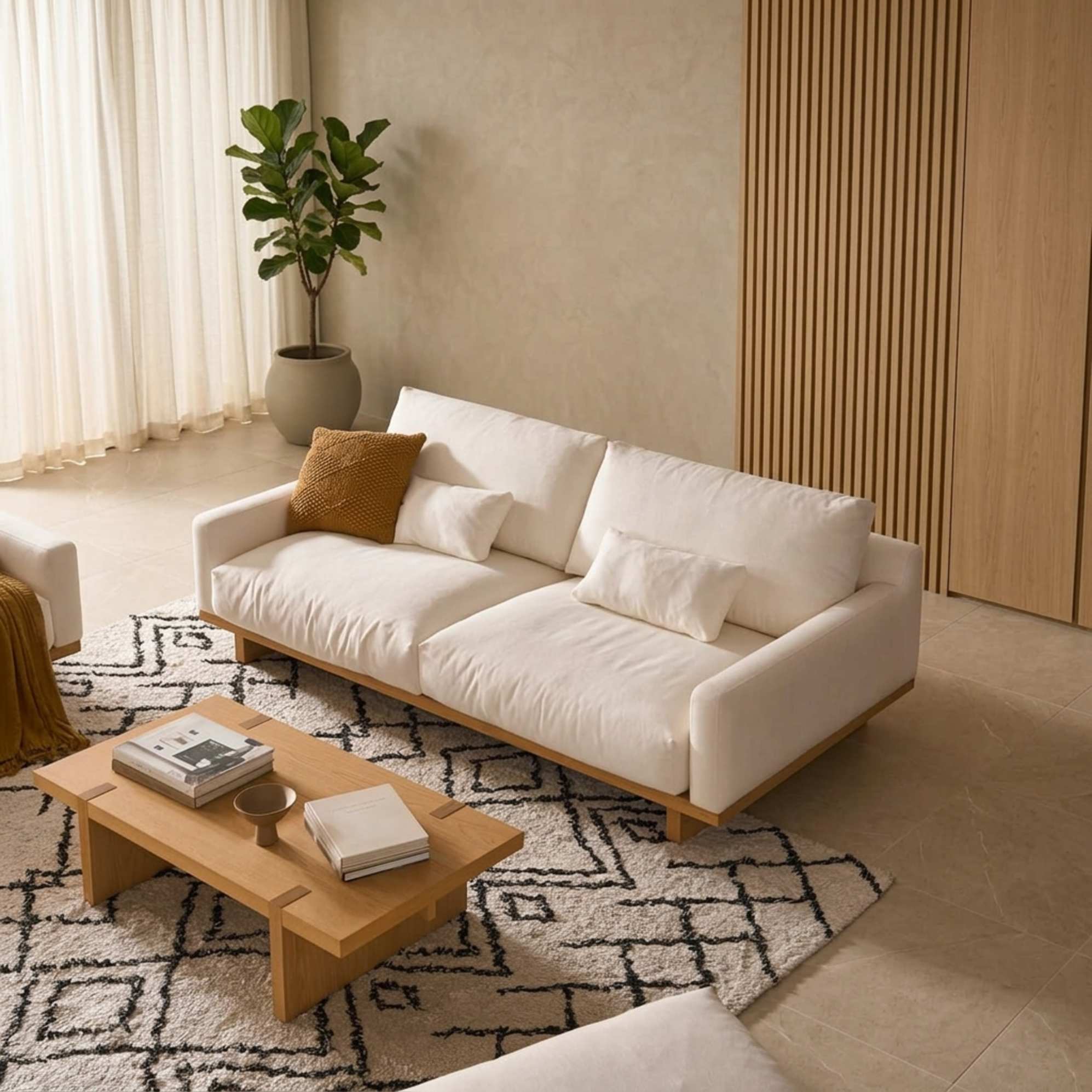
The Mori Performance Fabric Single Arm 2 Seater Couch
Picture credits: @jco.naturehome
The Mori Performance Fabric Single Arm 2 Seater Couch
Picture credits: @jco.naturehome

The Tribeca Round Dining Table
Picture credits: @briannawonggg
The Tribeca Round Dining Table
Picture credits: @briannawonggg

2. Linen, cotton and other natural fibres
Fabric is where Japandi either feels lived-in or starts to feel staged. Think about the materials you actually touch every day: the sofa you collapse onto after work, the cushion beneath your arm, and the bedding you disappear into at night.
These are the details that make a room feel like a home rather than a showroom.
Natural fibres are a natural fit for Japandi because they bring subtle texture without visual noise. Instead of looking perfectly smooth and uniform, they have a little character.
Linen or cotton: Which is better for Japandi?
Linen and cotton aren't rivals; they simply do different jobs.
Linen has a naturally textured appearance and tends to look even better as it softens and develops character over time. Cotton is softer and more familiar, making it useful for bedding, cushion covers, and other pieces that need to handle regular washing and everyday use.
If you're deciding between the two, think about how you'll use the material rather than which one looks more "Japandi".
Choose linen for texture: Its slightly irregular weave adds visual interest to otherwise quiet rooms.
Choose cotton for softness: It's practical for bedding and washable textiles that need to feel comfortable against the skin.
Layer both: A linen cushion on a cotton sofa or cotton bedding with a textured linen throw can create depth without adding another colour.
Bring in wool for warmth: Wool works particularly well in rugs and throws where you want texture and insulation without a shiny finish.
The best Japandi homes don't look perfectly untouched. A little creasing in the linen, a softened throw, and a rug that has picked up the occasional footprint are part of the point.
3. Stone and ceramics
Stone and ceramics usually come last, once the big decisions are made and the budget's nearly spent. Which is a shame, because they're quietly the hardest-working things in the room. The rule is honest texture over polish, and it shows up a few ways:
Pick stone with a matte surface: Honed or brushed, never buffed to a shine. Limestone is the reliable baseline, and soapstone or sandstone wear just as well and read warmer than a glossy slab.
Skip the book-matched marble: The mirrored veining is genuinely beautiful; it's just built to announce itself, which is the opposite of what a calm room is after. The same restraint carries over to organic modern style elsewhere in the home; honest texture over polish is where the two overlap.
Treat ceramic flaws as the point: A hand-thrown bowl with an uneven glaze, a vase with a visible seam, or a slightly off rim. These aren't imperfections to design around; they're the reason to choose the piece
Look to Japanese pottery for the logic: Traditions like Bizen and Shigaraki built entire aesthetics on exactly this. Firing marks and irregular texture read as evidence of the making, not a defect in it
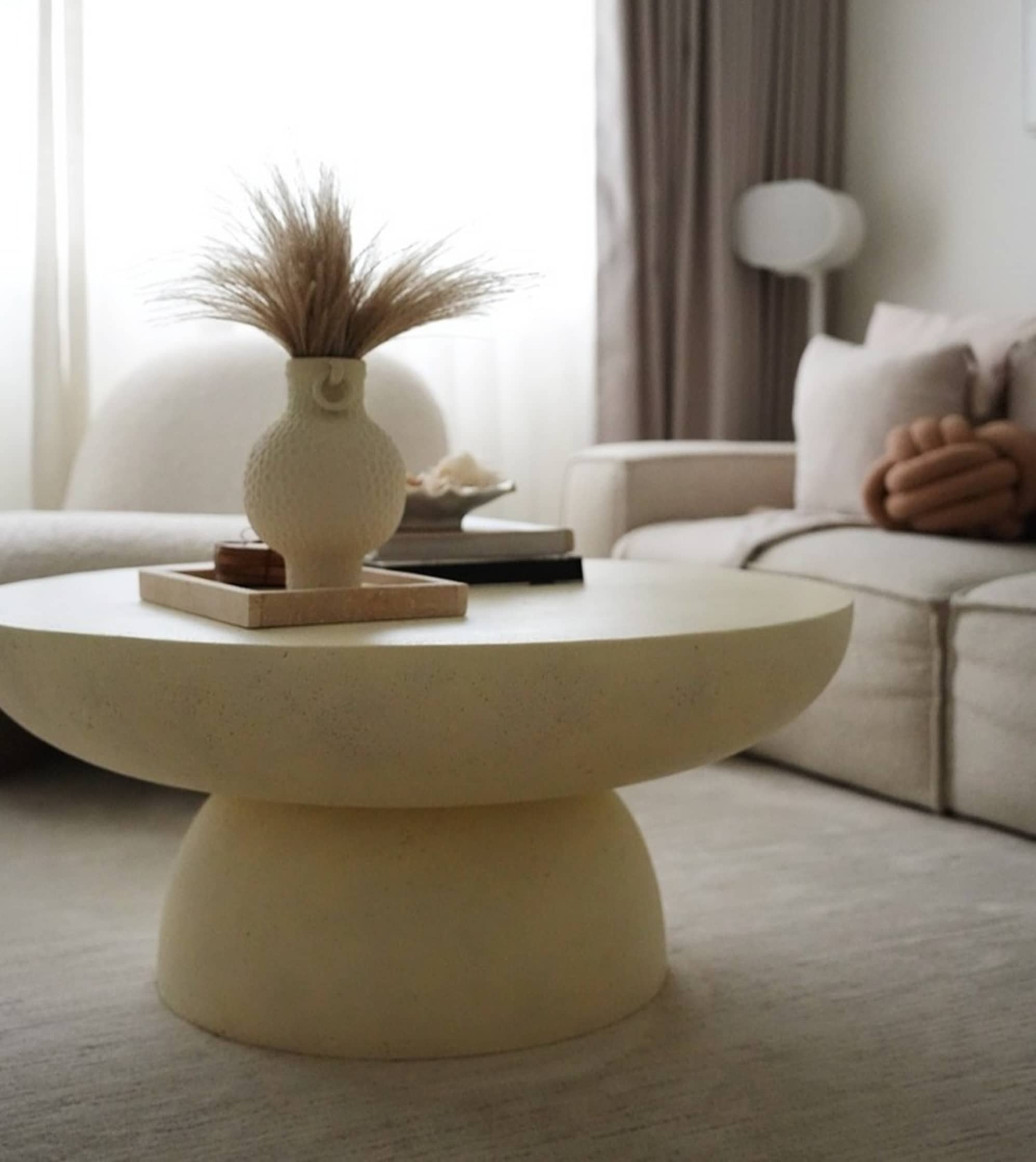
The Guin Round Coffee Table
Picture credits: @bobmubarak
The Guin Round Coffee Table
Picture credits: @bobmubarak
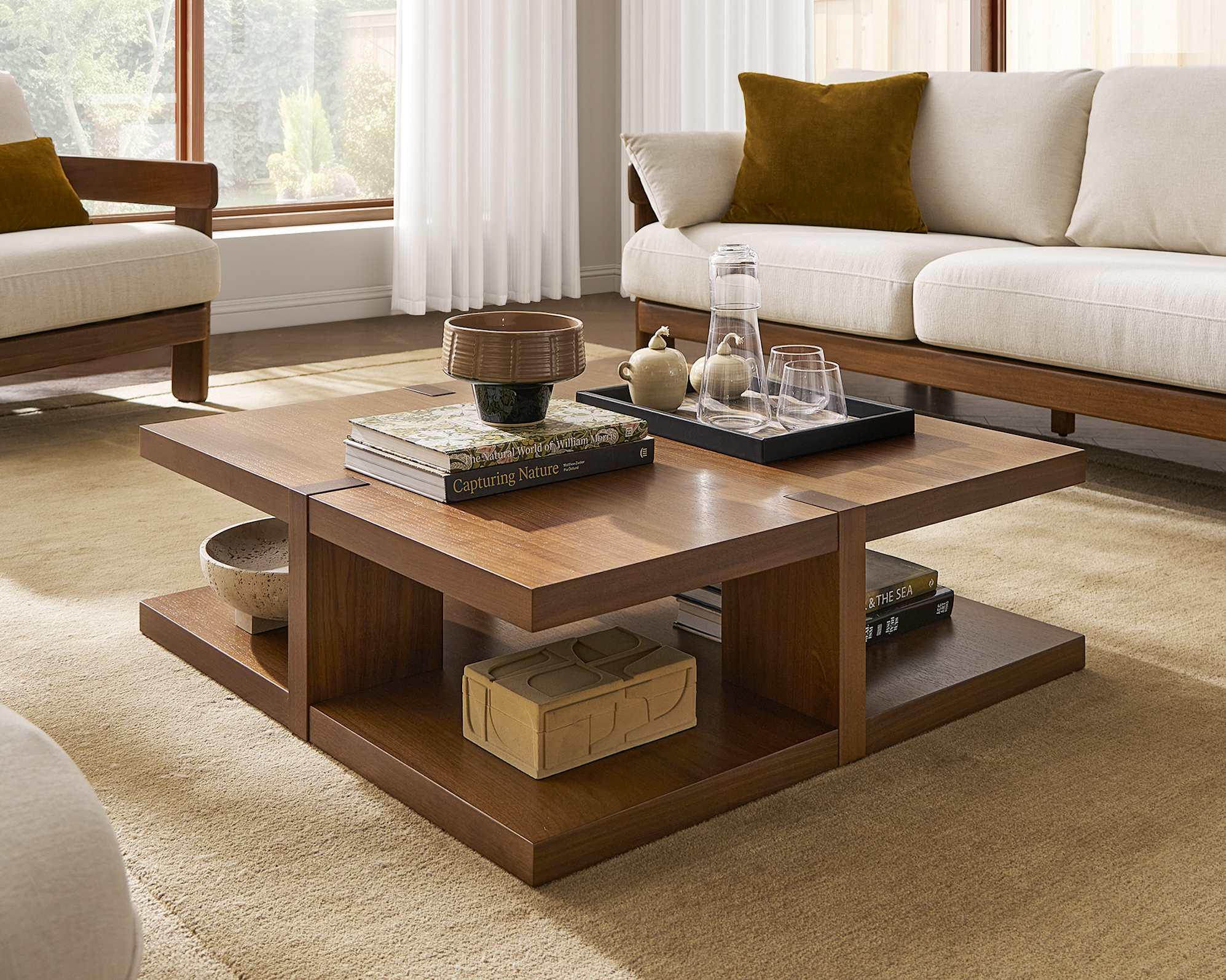
The Albie Travertine Rectangular Coffee Table.
Picture credits: @ddebrajane
The Albie Travertine Rectangular Coffee Table.
Picture credits: @ddebrajane

How to incorporate Japandi materials into your home
Knowing the right materials is one thing. Getting them into a room without it feeling like a checklist is another. The difference usually comes down to sequencing: start with the surfaces you can't easily change, then layer in the smaller pieces that do the personality work.
| Layer | What to choose | Why it works |
|---|---|---|
| Walls and flooring | Warm whites, soft beige, pale oak, natural timber, or understated stone-look finishes | Creates a quiet foundation that lets natural materials stand out |
| Major furniture | Oak, ash, or walnut with visible grain and a matte or natural finish | Adds warmth and structure without overwhelming the room |
| Upholstery | Linen, cotton, wool, or textured natural blends in muted neutrals | Brings softness and tactile interest to harder surfaces |
| Rugs and textiles | Jute, wool, cotton, or other understated natural fibres | Adds warmth and texture underfoot without introducing visual clutter |
| Stone and ceramics | Honed stone, handmade-looking ceramics and subtle organic shapes | Adds weight, variation and a sense of craftsmanship |
| Lighting | Warm, diffused light with natural or textured shades | Keeps wood and neutral materials feeling warm rather than clinical |
| Decor | A few meaningful ceramics, woven pieces or natural objects | Gives the room personality without filling every surface |
Fewer materials, chosen better
That's the heart of Japandi materials: fewer materials, but chosen better. You don't need every natural material in the book. You need a handful that work together: warm timber, tactile linen or cotton, textured wool, grounded stone and ceramics with enough character to remind you that a person made them.
And don't worry about making everything perfect.
A Japandi room should age with you. The linen gets softer. The wood develops character. The ceramic bowl picks up a tiny mark from being used every morning. The room changes because you do. That's what makes the style feel less like a trend and more like a way of living.
Frequently asked questions about Japandi materials
What makes Japandi style?
Japandi comes from combining Scandinavian functionality with Japanese minimalism, specifically the wabi-sabi philosophy of finding beauty in imperfection. It shows up as a restrained material palette: pale to mid-toned wood, natural fibres like linen and cotton, stone and ceramics chosen for texture rather than polish. The furniture tends toward clean lines and a low profile, a nod to traditional Japanese seating.
Are wabi-sabi and Japandi the same?
No. Wabi-sabi is a Japanese philosophy about finding beauty in imperfection, asymmetry and the visible signs of age. Japandi is an interior design style that borrows wabi-sabi as one of its two main influences, alongside Scandinavian design. Think of wabi-sabi as one ingredient in Japandi, not the whole recipe.
How does Japandi interiors differ from Scandinavian
Scandinavian design leans toward brightness, symmetry and a fairly uniform light wood palette. Japandi pulls in a bit more weight and depth, borrowing from the darker, more considered tone of traditional Japanese interiors and layering in materials that are allowed to show wear. The result reads warmer and slightly more grounded than pure Scandinavian minimalism, without losing the simplicity that made Scandi popular in the first place.
